


Rituals and Herbs for Winter Dryness
Winter tends to dry things out.
In these months where the light fades earlier and the air feels dry and crisp, we find ourselves reaching for lip balm, extra layers, maybe a little more slowness than usual. We like to think of winter as a call toward hydration and warmth. Toward practices (and plants) that soften the cold.
Below are the ways we work to support dryness through the winter months.
Whole-Body Winter Hydration
When we talk about dryness, we’re rarely talking about just skin. Dryness can show up as tight joints, brittle nails, scratchy throats, restless sleep, or that parched feeling that water alone doesn’t seem to fully quench.
From an herbalist perspective, dryness is often met with three things: moisture, warmth, and consistency.
Topical Moisture That Lasts

Winter skin asks for layering. Water first, then oil.
A facial mist or hydrosol offers immediate hydration for dry skin - cool, aromatic, refreshing. Followed by a face oil, that moisture is sealed in, creating softness that sinks in instead of evaporates.
Similarly, using a body oil directly after showering, before fully drying off, seals in moisture and helps the oils sink more deeply into the skin.
It's nice to apply products slowly and massage them in thoughtfully, using this ritual as a moment to tend our nervous systems as well.
Supportive skin habits we return to each winter:
- Applying oil to moist skin (always)
- Keeping showers warm, not too hot
- Running a humidifier at night
How to Treat Dry Skin Internally
What we eat and drink shapes how winter’s dryness feels in our bodies, too.
Warm foods, soups, healthy fats, porridge, and tea sipped slowly instead of iced water gulped on the go.
Certain herbs can also support internal hydration. Plants like marshmallow root and flax seed have long been used to support internal moisture and nourishment. Their soft, gel-like qualities coat and soothe the digestive tract, helping the body feel hydrated from the inside out. Additionally, mineral-rich plants add trace nutrients that support tissues, making winter feel a little gentler and easier on the body.
Which brings us to tea.

Herbal Teas for Hydration
Winter thirst is subtle. We don’t always feel parched, but dryness accumulates anyway. Warm, hydrating herbal teas offer moisture that's enjoyable. Something the body actually wants.
Bright, aromatic blends like those in Helios Tea lift the heaviness of dark afternoons, with marshmallow root gently softening the throat and digestive tract, and lavender and lemon verbena adding a subtle lift. Mineral-rich Village Tea nourishes from the inside out, supporting tissues and adding a sense of replenishment. Soft, warming blends like Tulsi Trinity offer gentle spice and adaptogenic support when the nervous system is tired, inviting calm energy.
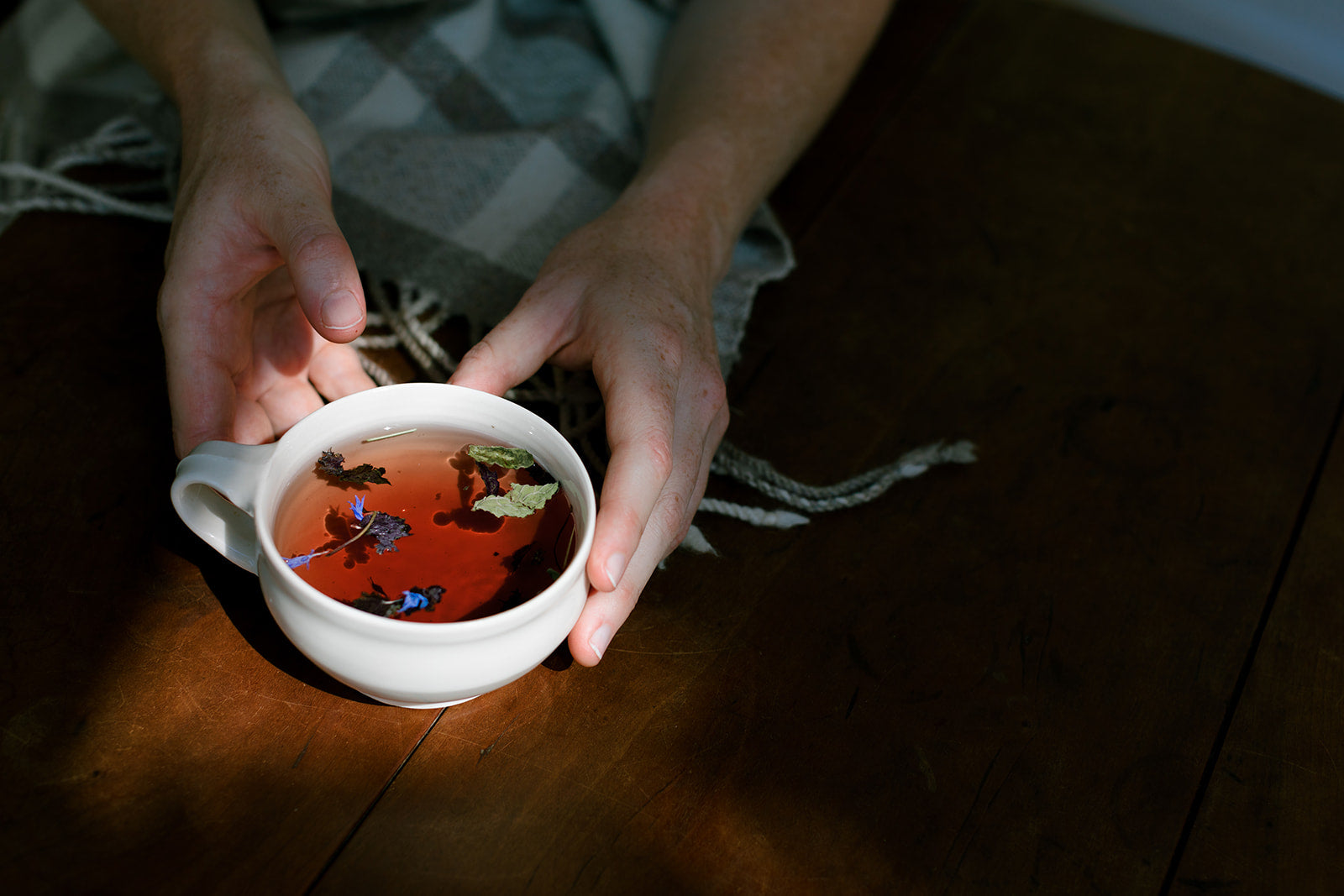
For us, tea is a pause. Warm hands, rising steam, and a few quiet minutes to settle back into our own rhythm.
If this season has you feeling a little dry, a little tender, a little dim - know that you’re moving in rhythm with winter itself.
Common Questions About Winter Dryness:
Why does winter make my skin feel extra dry even if I moisturize?
Cold air holds very little moisture, and indoor heating strips the air of humidity, which pulls water right out of your skin’s barrier. That’s why moisturizing alone can feel like a drop in the bucket. Increasing air moisture (like with a humidifier), protecting skin from harsh winds, and being mindful of water temperature in showers help keep your barrier strong and happy.
How should I use face mist and face oil together for winter hydration?
Start with clean skin. Mist generously in the morning and evening to soften and prepare the skin, this helps it better receive oil-based moisture. While the skin is still damp, dispense 1–2 pumps of face oil and massage gently into the skin to seal hydration in. You can also mist throughout the day as needed, taking a few deep breaths to enjoy the aromatic benefits before reapplying oil if desired.
Does staying hydrated with water actually help winter dryness?
Water is part of the picture, but winter dryness is about both air moisture and tissue nourishment. Eating water‑rich foods and sipping warm herbal infusions help, but pairing that with practices that protect the skin barrier (like gentler cleansing, eliminating topicals with fragrance and essential oils, and moisture sealing) makes hydration stick.
Are there simple diet changes that help with winter dryness?
Eating soups, broths, and foods with healthy fats supports internal hydration and a more resilient skin barrier. And foods rich in antioxidants and omega‑3s (like leafy greens and seeds) can help protect cells from the stress of cold, dry air.
When should I consider professional help for winter dryness?
If dryness is severe or persistent despite adjusting habits, especially if there’s pain, cracking, or irritation that doesn’t improve, talking with a healthcare provider can be a supportive next step.
Leave a comment